One sec…
Blueberry
Foundational sweet-berry indica — DJ Short's classic.
Blueberry is on the shelf at Seattle Cannabis Co. today.
Live stock updates every few minutes. Call ahead if you want a budtender to set one aside.
Blueberry is one of the load-bearing heritage strains in modern cannabis, and the answer when an older customer asks what 'real blueberry flower' used to smell like before the candy-fruit hybrids took over the back end of the shelf. The credited breeder is DJ Short, who began the pheno-hunt in the late 1970s working with Afghani indica seedlines and two Thai sativa lines (Purple Thai and Highland Thai, the latter sometimes called Juicy Fruit Thai in older catalogs), refining the keeper cuts through the 1980s and into the 1990s. The strain broke into national attention by taking Best Indica at the 2000 Amsterdam High Times Cup — already a long-running underground favorite, the win moved it from cult to canonical. From a lineage perspective Blueberry is one of the most important crosses on the modern shelf because it is also the indica parent of Blue Dream; nearly every fruit-forward strain that has landed since traces some genetic ancestry back to DJ Short's work. On the floor the aroma reads as actual ripe blueberry skin — not blueberry candy or blueberry muffin, the real fruit — sitting over an earthy hash-base from the Afghani side. Customers who came up on modern dessert hybrids sometimes describe a true Blueberry jar as 'subtle' compared to the candy-loud cuts; older customers describe it as 'what blueberry actually used to smell like.' Both reads are accurate; they are describing different generations of strain.
Live inventory
In stock today
6 Blueberry-related products available at Seattle Cannabis Co. right now.
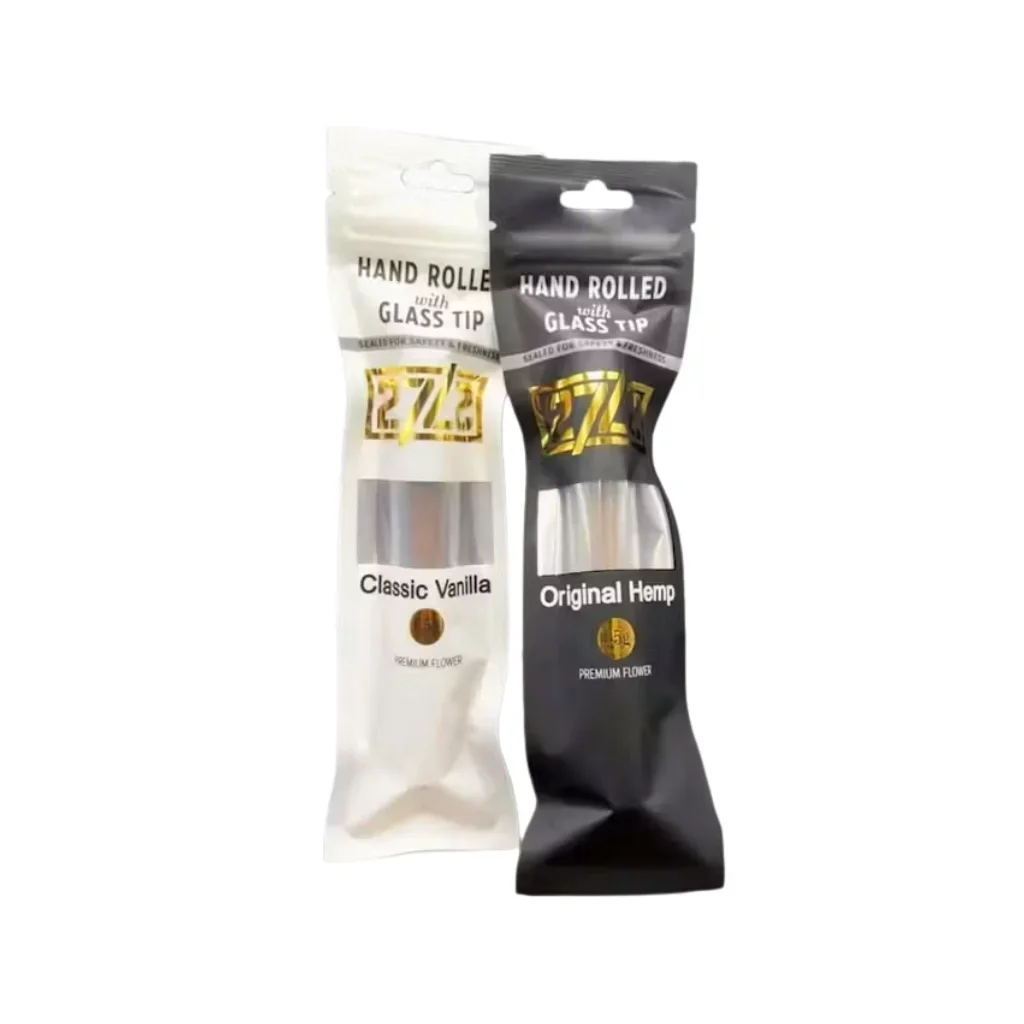
2727
2727 · Blunt · 1.5g
THC 24.4%·DOH Preroll
$9.00$15.00
✓ Blueberry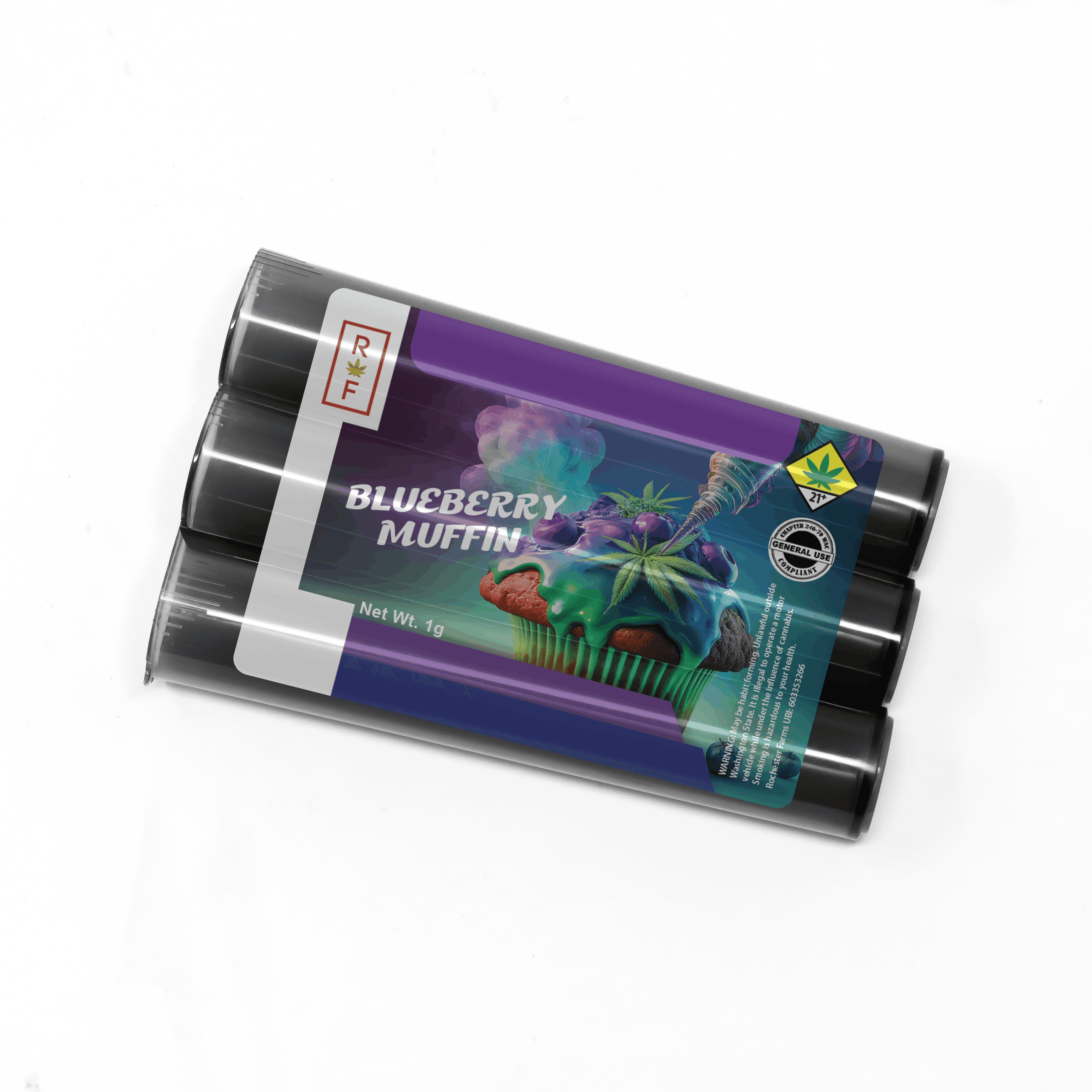
Rochester Farms
Rochester Farms · DOH Preroll
THC 21.3%·DOH Preroll
$4.20$7.00
✓ Blueberry
Venom
Venom · Cured Resin · 1g
THC 66.9%·Concentrate
$7.20$12.00
✓ Blueberry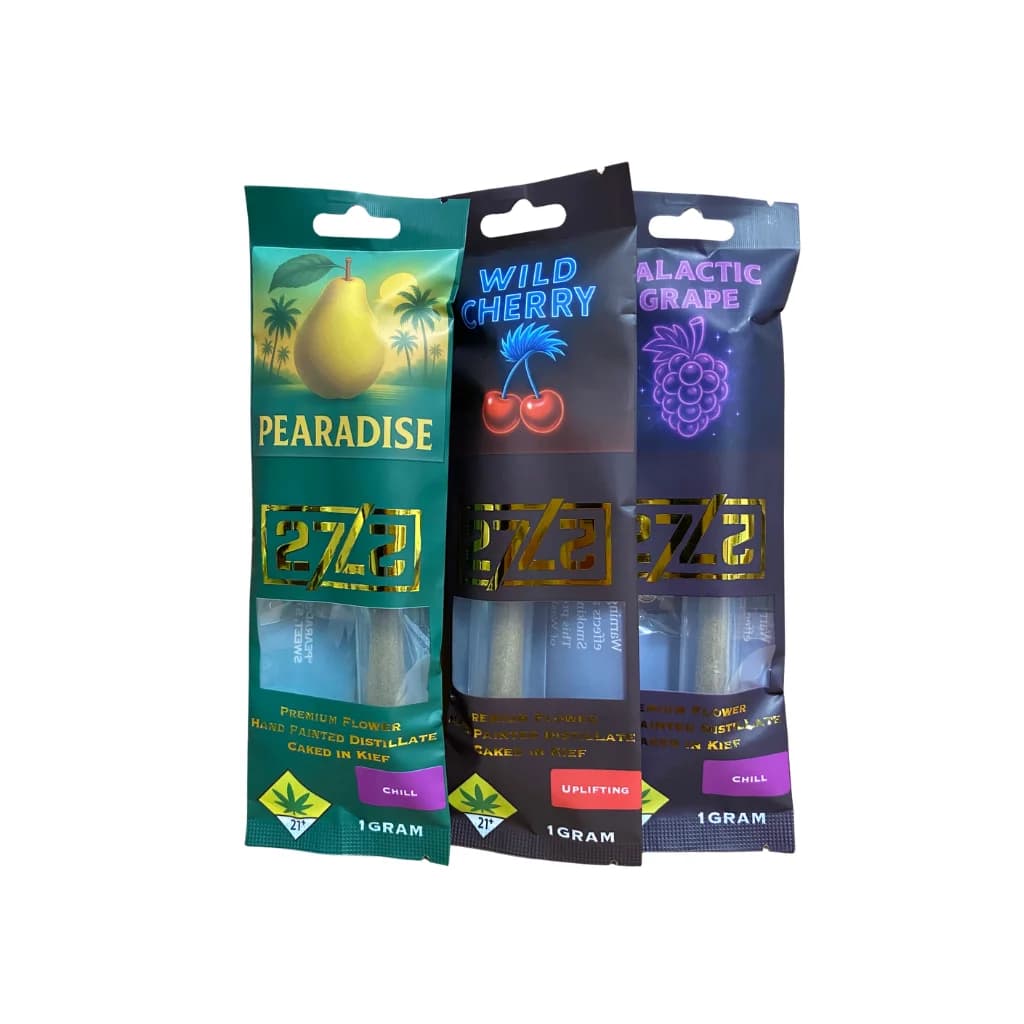
2727
2727 · Infused Preroll · 1g
THC 36.5%·Infused PreRoll
$7.80$13.00
✓ Blueberry
DOSE
Dose · DOH Infused Preroll · 1g
THC 44.0%·DOH Infused PreRoll
$8.40$14.00
✓ Blueberry2727
2727 · Blunt · 1.5g
THC 22.8%·DOH Preroll
$9.00$15.00
✓ BlueberryOn the same receipt
People who pick Blueberry also reach for these
Drawn from real basket patterns at the shop — strains regulars tend to grab on the same trip.
Genetics
Family tree
Blueberry's parents, descendants, and sister strains in the catalog.
Sister strains (share a parent)
Aromatic chemistry
Terpene profile
Myrcene
Myrcene is the body-cadence foundation and the molecule responsible for what most customers describe as the 'old-school' character of Blueberry — earthy, ripe-fruit-skin, with the damp-soil note that appears in nearly every heritage indica chemotype. It is the dominant terpene on most Blueberry lab reports, and it explains why the strain reads body-leaning even though the THC numbers are moderate by modern standards. Customers chasing the evening cadence reach for myrcene-forward indicas almost by default, and Blueberry is one of the cleaner expressions on the shelf.
Caryophyllene
Caryophyllene is the peppery accent that gives Blueberry its grounded finish — a warm back-of-tongue snap on exhale, from the molecule family responsible for the bite in fresh-cracked peppercorn. On Blueberry specifically the role is preservative against sweetness: ripe-fruit-skin can drift toward jammy on its own, and the caryophyllene is the savory weight that keeps the chemotype balanced. Some lab reports put caryophyllene at the top of the chart for particular Blueberry phenos, which makes the peppery back-finish a useful identifier for a specific grower's cut.
Pinene
Pinene is the soft pine note arriving on the exhale just behind the earth — green and fresh, the way a broken-open pine branch reads, with no cleaner-chemical sharpness. It is the brightness layer that keeps Blueberry from collapsing into one-note earthy, and it is also one of the terpene markers tying the strain back to its Thai sativa ancestry; pure Afghani indicas typically do not produce this register, which is how a customer can tell a true DJ Short Blueberry apart from an indica-leaning hybrid that borrowed the name without inheriting the genetics.
Customers often describe
RelaxedSleepyHappyHungry
Aroma + flavor
Sweet blueberryBerryEarth
Best for
- ✓ Best as an evening indica after the workday is closed
- ✓ Pairs with a slow meal, a quiet room, and a low-key end of day
- ✓ Goes well with returning customers who want the heritage chemotype rather than a candy hybrid
- ✓ Anchor strain for anyone learning what the original fruit-forward indica register tasted like
Be cautious if
- ! You want energetic head-up effects
- ! Sweet aromas turn you off
Frequently asked about Blueberry
Is Blueberry actually the parent of Blue Dream?
Yes — Blueberry is one of the two parents of Blue Dream (the other is a Haze sativa). Blueberry contributes the fruit-forward aroma that gives Blue Dream its name, the body-cadence floor, and the Afghani backbone; Haze contributes the head-up character and the longer-burn finish. Customers who like Blue Dream and have never tried straight Blueberry usually find the lineage immediately legible the first time they open a jar.
Why does Blueberry matter historically?
Blueberry is the foundational fruit-forward chemotype in modern cannabis. DJ Short's pheno-hunt across the late 1970s and 1980s yielded one of the first commercially stable berry-aroma seedlines, and the 2000 Best Indica honor at Amsterdam's High Times Cup is what moved it from an underground favorite to a canonical anchor. Genetically the strain sits upstream of a generation of crosses — Blue Dream, Blueberry Headband, Berry White, Blue Cookies, and dozens of other 'blue' or 'berry' names on a 2026 shelf carry some DJ Short heritage in their family tree. Plenty of customers buy those descendants without ever connecting them back to Blueberry; the seedline did the work quietly.
Is Blueberry indica, sativa, or hybrid?
Indica, on the body-leaning end of the register despite the two Thai sativa parents sitting in the genetic background. The Afghani side carries the body weight and the hash-base aroma; the Purple Thai and Highland Thai contribute the fruit register and just enough head-character that the strain never collapses into one-note sedation. Customer reports tend to describe the experience as body-loose with a gentle head — the kind of cadence that lands a session squarely on the couch end of the evening rather than the kitchen end.
What does Blueberry actually taste like out of the jar versus when you smoke it?
Out of the jar the nose reads as actual ripe blueberry skin — the real fruit, not a candy approximation — over an earthy hash-base, with a faint pine note hiding just underneath. On the inhale the blueberry comes through first, sweet but not syrupy; on the exhale the earth lands and the pine accent appears, with a peppery finish from the caryophyllene that lingers longer than the inhale would predict. The taste-versus-smell match is unusually close, which is part of why customers describe the strain as 'honest.'
How does Blueberry's potency sit next to a 28% modern hybrid?
Most Blueberry phenos COA between 15 and 20% THC, with the better keeper cuts reaching the 22–24% band. By 2026 shelf standards that reads as moderate rather than upper-tier — well under what the modern dessert hybrids are testing at. Regulars who came up on 28%+ cuts sometimes describe Blueberry as feeling 'milder on paper,' but the body-cadence chemotype delivers more per-milligram experiential weight than a balanced hybrid of the same number; the felt potency runs ahead of the lab figure. Newer customers tend to pace it easily; tolerance-built customers pick it for indica direction, not ceiling.
What time of day is Blueberry best for?
Evening, after the workday has closed out and the remainder of the night belongs to the couch. The body cadence makes Blueberry unworkable as a daytime carry for most customers, and the slow-onset arrival — ten or fifteen minutes before it settles in fully — makes it a bad fit any time alertness is required within the following hour. Some regulars do reach for it on a slow obligation-free afternoon; most reach for it as the post-dinner anchor of the evening.
How does Blueberry compare to other heritage indicas like Northern Lights or Granddaddy Purple?
Against Northern Lights: Blueberry comes through markedly fruitier on the nose because the Thai parents contribute aroma compounds that the Afghani-Thai NL chemotype does not. Effect-wise both arrive at a similar evening landing point, but Blueberry holds a lighter head feel through the session while NL leans heavier on body weight. Against Granddaddy Purple: GDP runs darker and more grape-forward — older-register cabernet rather than fresh produce — while Blueberry runs brighter, with the actual ripe berry character DJ Short was chasing. Most regulars who reach for one of these three rotate the other two in by season.
Why does Blueberry smell less loud than modern fruit-forward hybrids?
The aroma register is different rather than weaker. Modern dessert hybrids on the candy-fruit side of the shelf are often selected for very high concentrations of specific aroma compounds — limonene-dominant cuts that read like Jolly Ranchers, or linalool-and-caryophyllene cuts that read like bakery boxes. Blueberry's aroma comes from a more distributed terpene profile that produces actual-fruit character rather than candy-fruit character. The smell is unmistakable to anyone who has tried real Blueberry once; new customers who came up on candy-loud hybrids sometimes underestimate it on the first whiff.
Other indica strains worth a look
Northern Lights
The classic sleep indica. Old-school, reliable.
Afghani × Thai (debated)
Grape Ape
Sweet grape indica — heavy, mellow, classic.
Mendocino Purps × Skunk × Afghani
LA Confidential
Old-school SoCal indica — fast, heavy, piney.
OG LA Affie × Afghani
Critical Mass
Heavy-yielding indica — relaxed, mellow, sweet-earthy.
Afghani × Skunk #1
Big Bud
Afghani × Northern Lights × Skunk — heritage yield-monster indica.
Afghani × Northern Lights × Skunk
Purple Kush
Hindu Kush × Purple Afghani — Oakland heritage purple indica.
Hindu Kush × Purple Afghani
Verified May 15, 2026 against 3 sources.
21+. Cannabis affects people differently — your experience may vary. Not medical advice. Effects described are common customer reports, not promises. Seattle Cannabis Co., Seattle, WA.