One sec…
Cheese
Pungent UK hybrid — yes, it really smells like cheese.
Cheese is on the shelf at Seattle Cannabis Co. today.
Live stock updates every few minutes. Call ahead if you want a budtender to set one aside.
Cheese is the British cannabis classic and the strain most likely to teach a new customer what the word 'pungent' means on a jar label. The lineage traces back to a Skunk #1 phenotype hand-picked in the late 1980s by a UK grower (commonly credited to a Sensi Seeds Skunk #1 seed pack that produced a single anomalous keeper), then circulated through the British underground for years before commercial seedlines caught up. The original cut became known simply as UK Cheese; Big Buddha Cheese is the most successful commercial re-issue, crossing the original UK Cheese clone with an Afghani to stabilize the trait for seed production — and Big Buddha Cheese took home the 2006 Cannabis Cup Best Indica title in Amsterdam, which is what carried the chemotype into broader international circulation. The aroma is the entire point: sharp aged-cheddar with a sour-skunk base, the kind of jar that customers either immediately recognize from their teenage years in the UK or immediately ask 'is that a defect.' It is not a defect — it is the natural terpene chemistry, and there are not many other strains that produce anything close to it on the modern shelf. Effect-wise it reads as an indica-leaning hybrid with a clear head-character; the balance is closer than the pungent-skunk aroma would suggest, and customers who expect a couch-locker the first time are often surprised by how head-up the cadence is for the first thirty minutes before the body settles. The aroma is polarizing — half the customers who walk past it specifically request it next time; the other half walk past it forever — but it is one of the most honest strain-name-matches in cannabis.
Live inventory
In stock today
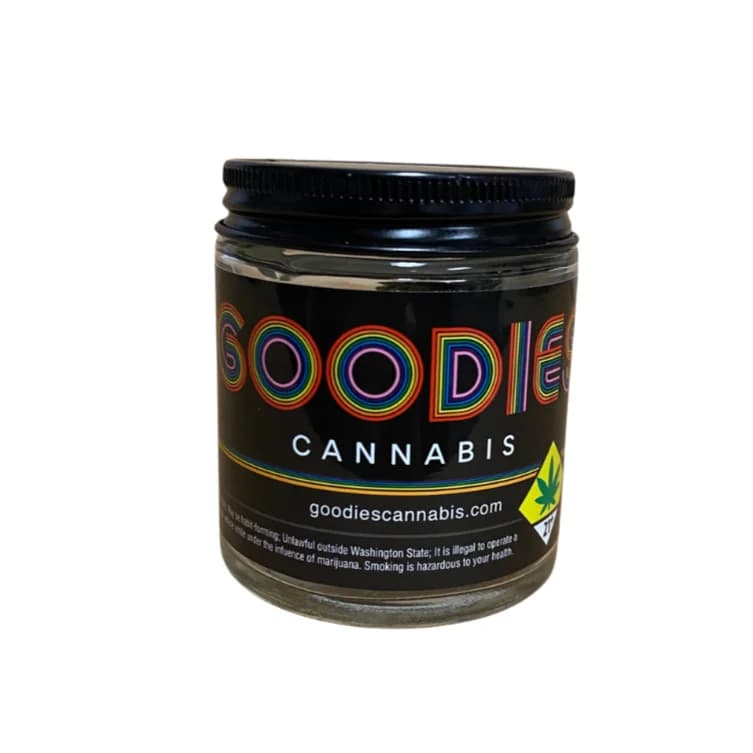
1 Cheese-related product available at Seattle Cannabis Co. right now.
Genetics
Family tree
Cheese's parents, descendants, and sister strains in the catalog.
Sister strains (share a parent)
Aromatic chemistry
Terpene profile
Myrcene
Myrcene is the earthy bottom layer and the molecule that anchors what most customers identify as the 'cheese' character — damp soil, fermented hay, the chemistry that produces sharp-aged-cheese aroma in actual dairy fermentation overlaps with what myrcene-heavy cannabis chemotypes produce in the cure. It is also the chemical reason Cheese lands indica-leaning even though the lineage suggests a more balanced cross; the body cadence tracks directly to the myrcene loading.
Caryophyllene
Caryophyllene is the peppery accent that gives Cheese its substantial finish — the warm-spice base on the exhale, same compound family as fresh-cracked black pepper. On a strain this aromatically loud the caryophyllene is what keeps the sharp-cheese top from drifting into one-note territory; it is the structure beneath the pungency, and customers who have tried both UK Cheese and Big Buddha Cheese describe the Big Buddha version as having a more pronounced peppery exhale because of the Afghani parent contributing additional caryophyllene weight.
Pinene
Pinene is the soft pine note that surprises new customers the first time they take a slow draw — fresh-crushed pine needles riding on the back of the exhale, the layer that gives Cheese a touch of head-up clarity riding alongside the developing body cadence. It is also the terpene marker that ties Cheese back to the broader Skunk family ancestry; pure indica chemotypes typically do not produce a pinene layer this clean, and the brightness is part of why Cheese stays head-engaged for longer than the aroma would predict.
Customers often describe
RelaxedHappyUpliftedCreative
Aroma + flavor
Sharp cheeseEarthy skunkSour
Best for
- ✓ Best as the strain that closes the workday into the early evening hours
- ✓ Pairs with a hearty meal — the sharp-cheese aroma lines up with savory food rather than dessert
- ✓ Goes well with social settings where a head-engaged hybrid carries the conversation
- ✓ Returning customers chasing the rare actual-cheese chemotype that nothing else on the shelf produces
Be cautious if
- ! You want a discreet aroma
- ! Pungent flavors turn you off
Frequently asked about Cheese
Does Cheese actually smell like cheese?
Yes — sharp, pungent, distinctively aged-cheddar with a sour-skunk base underneath. The aroma is the natural terpene chemistry (heavy myrcene plus caryophyllene over a Skunk #1 ancestral funk), not a marketing description that got attached after the fact. It is one of the most accurate strain-name-matches in cannabis, and customers who open a jar for the first time consistently respond with some version of 'oh, it actually smells like cheese.' Some find it appealing; some find it polarizing; almost no one finds it ambiguous.
Where did Cheese come from?
The original UK Cheese cut was hand-picked in the late 1980s by a British grower out of a Sensi Seeds Skunk #1 seed pack — a single anomalous phenotype producing the sharp aged-cheese aroma the rest of the pack did not. The cut circulated through the British underground for years as a clone-only variety before commercial seedlines could catch up. Big Buddha Cheese is the most successful seed-form re-issue, bred by crossing the original UK Cheese clone with an Afghani to stabilize the trait for seed production; Big Buddha's seed-form version captured the Cannabis Cup Best Indica trophy in Amsterdam in 2006, which is what carried the chemotype into broader international circulation.
Is Cheese indica, sativa, or hybrid?
Hybrid. Cheese sits much closer to center than the indica-dominant labeling on most jars implies. The Skunk #1 ancestry brings a clear head-character that holds for the first thirty to forty minutes of a session before yielding to the body cadence; the Afghani in Big Buddha's seed version pulls noticeably more indica-side than the original UK Cheese clone-only cut. Daytime-pick customers tend to find the early head-character workable; evening-pick customers find the body settle reliable once it arrives.
Is the flavor on the smoke as loud as the cheese-smell in the jar?
Yes — Cheese is one of the rare strains where the smoke matches the jar one-for-one. Sharp aged-cheddar comes in on the first draw, with the sour-skunk layer riding underneath the way it does on the crack of the jar. Exhale brings damp pine from the Skunk ancestry, a peppery back-of-tongue warmth from the caryophyllene, and the cheese still hanging in the room for a long stretch after. Most strains shift character between jar and smoke; Cheese does not. Medium-slow burn, dense ash.
How strong is Cheese on the shelf?
Most modern Cheese cuts land 15–20% on the COA — moderate for a 2026 shelf where dessert hybrids regularly clear 28%. Returning UK Cheese regulars often describe the strain as feeling more present per milligram than the THC number implies, especially in the first half hour when the Skunk-ancestry head-character is doing most of the work; the aroma loading carries a perceived intensity that the raw potency does not. Lower-tolerance customers usually find Cheese easy to pace, and high-tolerance customers tend to pick it for the cheese-aroma chemotype rather than for ceiling.
What time of day is Cheese best for?
Mid-to-late afternoon, rolling into the evening. The head-engaged opening half-hour makes Cheese viable as a strain to bridge from the workday into the night; the body cadence that comes in behind it limits how late into a focus-required task a customer can carry it — past about two hours and the cadence is too settled for sharp work. Some regulars take it specifically into social settings because the head-character carries conversation; others land it after a heavy meal because the aroma pairs with savory food unusually well.
Why does Cheese smell so much louder than other Skunk-family strains?
The original UK Cheese phenotype was selected for an unusual terpene expression that produces aged-dairy aroma compounds at concentrations most cannabis chemotypes do not reach. The chemistry that makes aged cheddar smell like aged cheddar (specific short-chain fatty acid compounds produced by fermentation) overlaps in interesting ways with what myrcene-and-caryophyllene-heavy cannabis chemotypes can produce in the cure. Other Skunk #1 phenotypes carry the underlying skunk-funk; Cheese specifically carries the dairy-fermentation top layer that almost nothing else on the shelf produces.
What's the difference between UK Cheese and Big Buddha Cheese?
UK Cheese is the original clone-only cut from the late 1980s — circulated through the British underground for years, and still considered the gold-standard expression of the chemotype by older UK regulars. Big Buddha Cheese is the seed-form re-issue from the early 2000s, made by crossing the UK Cheese clone with an Afghani to produce a stable seed-line. Big Buddha leans noticeably more indica-side because of that Afghani parent; UK Cheese leans more head-engaged. Both produce the same sharp-cheese aroma. Modern Washington shelves stock one or the other under the simple 'Cheese' label and rarely both at once.
How does Cheese compare to other distinctive-aroma strains like Sour Diesel?
Both are strains where the aroma is the entire identity — Sour Diesel is the gas-and-citrus East Coast classic, Cheese is the aged-cheddar UK classic, and both produce immediate yes-or-no reactions on the floor. Sour Diesel runs noticeably more head-up and racey; Cheese runs more head-engaged at first then settles body-side. Regulars who like one usually appreciate the other even when they do not pick it; both belong to the rare category of strains where the nose alone is the request — customers ask by smell, not by genetics or by THC number.
Other hybrid strains worth a look
Blue Dream
California's everyday hybrid — balanced, fruit-forward, easy.
Blueberry × Haze
AK-47
Mellow sativa-leaning hybrid with a sharp earthy aroma.
Colombian × Mexican × Thai × Afghani
Pineapple Kush
Tropical-fruit Kush — sweet pineapple, calm body.
Pineapple × Master Kush
Skunk #1
Foundational hybrid — the strain that built modern cannabis.
Afghani × Acapulco Gold × Colombian Gold
White Widow
Foundational frosty hybrid — Dutch coffee-shop staple.
Brazilian sativa × South Indian indica
Cannatonic
Resin Seeds high-CBD hybrid — the founding CBD line.
MK Ultra × G13 Haze
Verified May 15, 2026 against 2 sources.
21+. Cannabis affects people differently — your experience may vary. Not medical advice. Effects described are common customer reports, not promises. Seattle Cannabis Co., Seattle, WA.